Getting quotes for your next exhibition stand? Sensible. Get a few, line them up, compare.
But if you exhibit more than once a year, the lowest quote and the best-value year are rarely the same thing. That gap is where a lot of experienced exhibitors quietly lose money, not on the stand itself, but on everything that happens between shows.
Let's talk about the maths that actually matters when you're running a calendar rather than a one-off.
The keenest quote and the best year aren't the same thing.
Comparing builders on a single stand is one job. Comparing them across a full year of shows is a different one, and it's the one that actually decides what you spend.
A number that looks keen for one build can fall apart the moment you ask it to do three. The stand that photographs beautifully at your spring show has to survive storage, transport, a reconfiguration for a smaller autumn stand, and a graphics refresh before anyone sees it again. If the quote only priced the first outing, the other three land on you later usually when there's no time to shop around.
So the useful question isn't "which stand costs least?" It's "which agency gives me the best year and is calmest, clearest, and honest about the full cost?"
Where the money actually hides when you have a multi-show year
The one-off costs are easy. It's the recurring ones that catch people, because they don't appear on the first quote and they don't stop after the first show.
Storage between shows. A reusable stand is a smart buy, but it has to live somewhere dry and secure for the ten months a year it isn't working. That's a recurring line, not a one-off. Over a multi-show year it can quietly rival a chunk of the build cost, so it belongs in the plan from day one.
Lifting and empties, at every venue. This is the one people miss. Your transport's usually accounted for, but getting the stand off the lorry and the empty cases stored during the show often isn't. Forklift hire for unloading, and somewhere for your empties to live while the show's on, are venue-priced and easy to overlook until the bill lands. Ask whether they're in the number or waiting for you on site.
Reconfigurations. Rarely do all your shows want the same footprint. A modular stand that flexes from a 6x3 to a 3x2 saves you rebuying, but only if it was designed that way. Ask whether you're buying one stand or the ability to run several.
Graphics refreshes. Messaging moves. A new product, a new campaign, a rebrand mid-year. If refreshing your graphics means reprinting the whole thing rather than swapping panels, that's a season-long tax you didn't see coming.
Design revisions and late changes. How many rounds of changes are included before the meter starts? Across a year of shows those rounds add up fast, and late artwork always costs more than early artwork.
None of these show up in a single lump sum. That's rather the point of a single lump sum. An itemised quote can't hide them, which is exactly why itemised is the only kind worth comparing.
What this looks like in practice
Take a client who exhibits across a busy calendar with several UK shows a year, plus a run of international ones. The temptation, every time, is to start fresh: new stand, new build, new invoice. What actually happened was quieter than that.
A set of bespoke display units built for one show came back out the following year, then again at a second show, and are now heading for a permanent home in the client's own showroom. Product plinths built for a launch in London have travelled to shows across Europe and are booked to work again next year. And a look developed for one international show got applied to the next, and the one after, the same design theme carried city to city, so the brand turns up looking like itself wherever it lands.
None of that happens by accident. It happens because storage, transport, lifting and reconfiguration were planned in from the start, not bolted on when the next show appeared on the horizon. The spend spread across the season instead of spiking every time. The stand got sharper each outing rather than starting from zero. And the client spent their energy on the show, not on solving the same logistics problem three times a year.
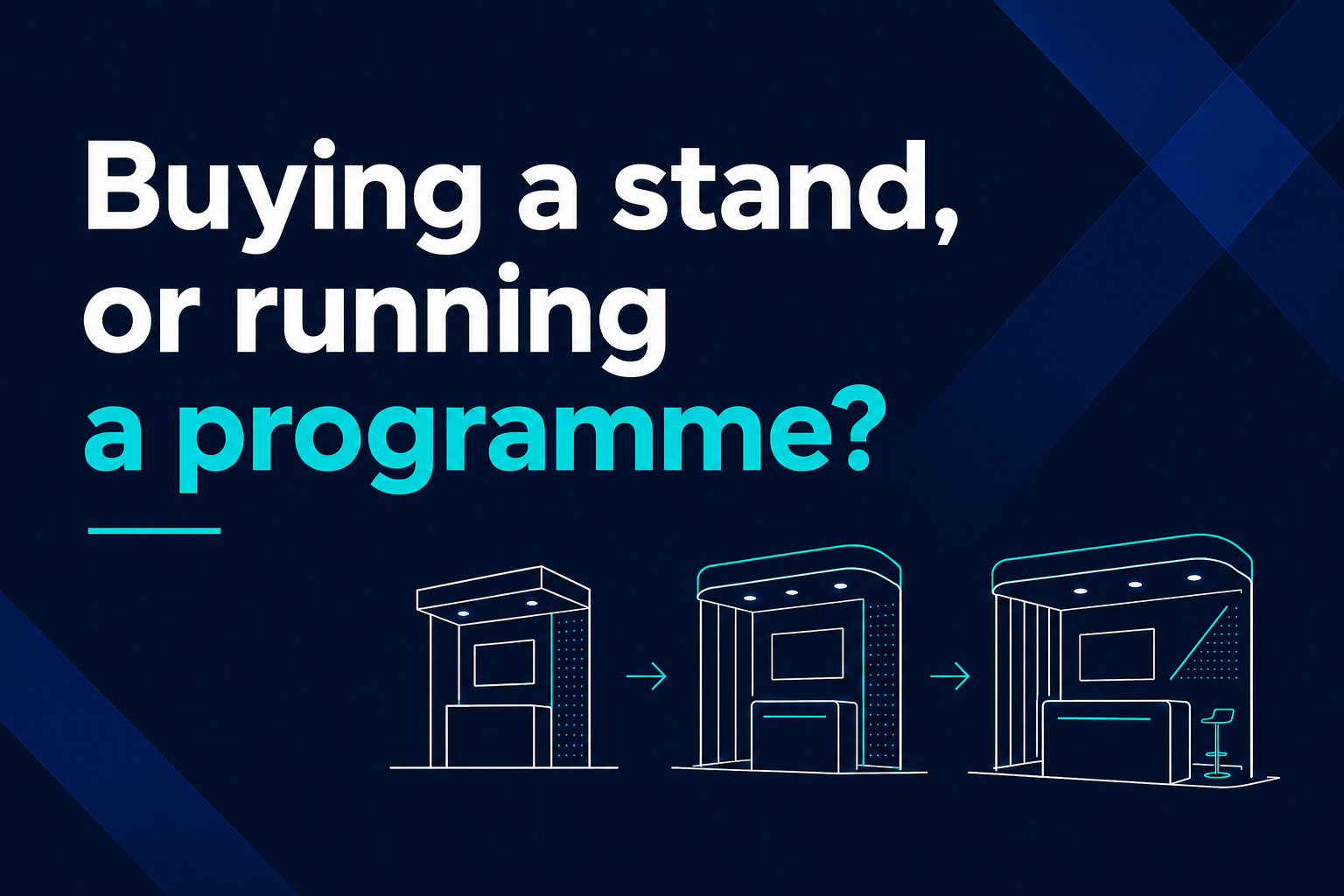
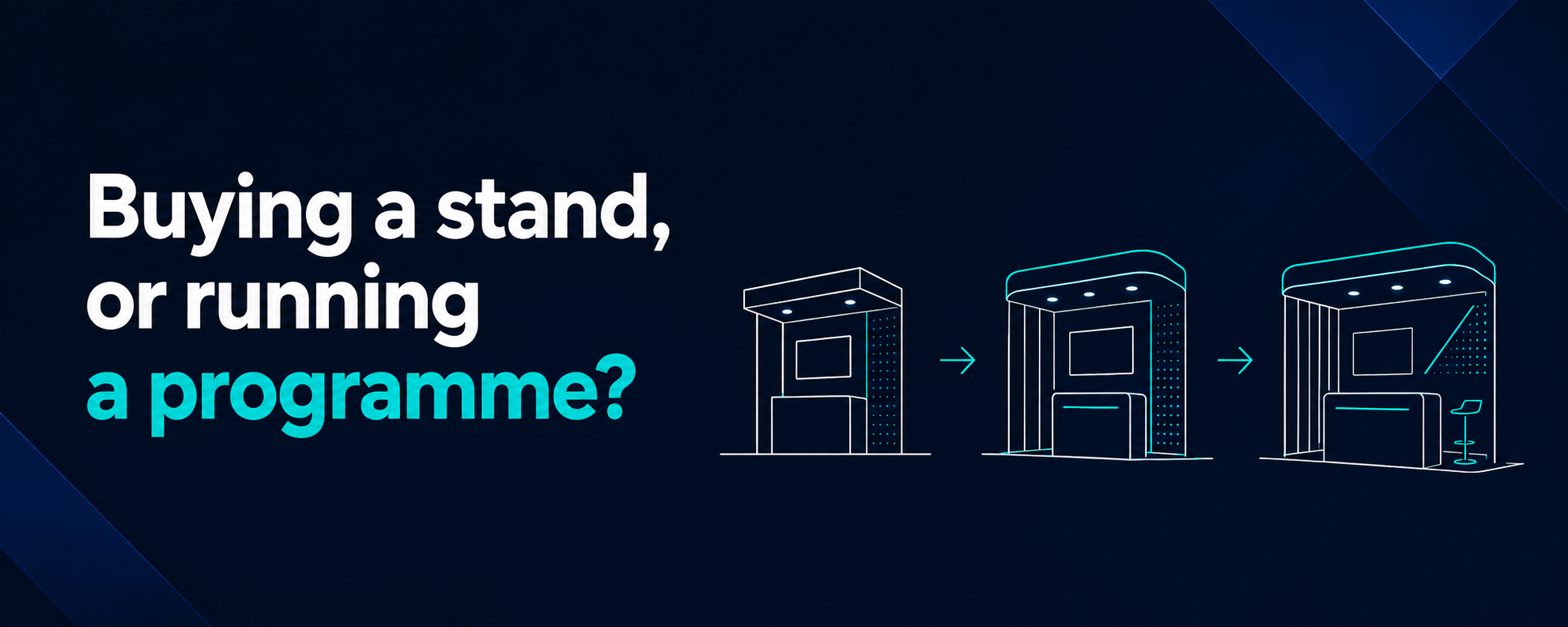
That's the difference between buying a stand and running a programme.
The questions worth asking before you commit to an agency for the year
You don't need to be an expert to plan a good season. You need the answers in writing before you sign, not after.
- Is this quote itemised, so I can see every line across the year?
- What's included for storage between shows, and where does the stand actually live?
- Are lifting and empties storage covered at each venue, or extra on the day?
- Can this stand be reconfigured for different footprints without a rebuild?
- How are graphics refreshes handled? Panel swaps, or full reprints?
- How many rounds of design changes are included before it costs more?
Ask those and most of the hidden season costs stop being hidden. A builder who plans calendars for a living won't flinch at a single one. They'll have the answers ready, because they'd rather you saw the whole year coming than got stung halfway through it.
That's all transparency really is. Not the lowest number, the honest one. And an honest quote for the whole season is the only kind worth building a year on.
Thirty years of seasons
We've been designing and building stands for thirty years, which is long enough to have costed a lot of calendars and seen every version of the mid-season surprise. We'd rather you never got one.
If you're planning a run of shows this year and want a quote you can actually read drop us a line. No hard sell, just a straight answer.
Not quite ready to talk? Take the quiz and see how show-ready your exhibition programme is.
Want to know more about how we build great stands for great brands? Sign up to our Newsletter, or if you're looking to make sure you've thought of everything for your build, why not download our The Ultimate Exhibition Success Kit.